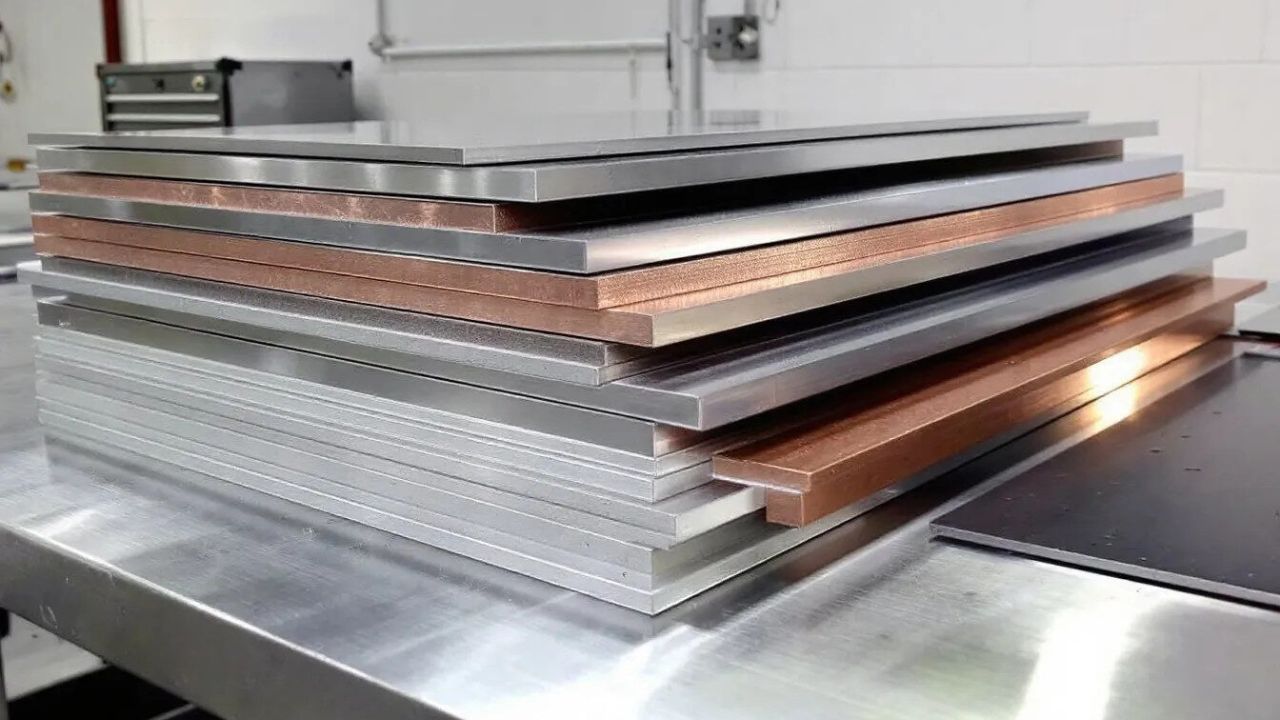
Custom sheet metal fabrication is a critical part of modern manufacturing as it allows a company to convert concepts into functional and high-quality metal products. This process facilitates flexibility, accuracy, and efficiency in industries like automotive, electronics, aerospace, and industrial equipment, between small-scale prototyping and mass production. The knowledge of the transformation of ShincoFab custom sheet metal fabrication by each of these stages assists the businesses in making more effective decisions on design, cost, and production.
The Role of Prototyping in Sheet Metal Fabrication
The initial significant step in the custom sheet metal fabrication is prototyping. At this step, manufacturers come up with a single or multiple sample parts in line with initial designs. These prototypes enable the engineers and product teams to test form, fit, and function prior to the full direction towards production.
Laser cutting and CNC bending are some of the processes that are used in sheet metal prototyping and deliver high accuracy and short turnaround time. The aim is not just to justify the design but also to find out possible problems connected with manufacturability, assembly, or material performance. Early prototypes aid in minimizing the chances of errors that may prove expensive in the later stages of production and enable the design to be altered quickly and efficiently.
Design for Manufacturability and Engineering Optimization
Design for Manufacturability, or DFM, is getting more significant as a project transitions out of the prototype phase. DFM aims at streamlining the design of parts by making sure that they can be manufactured in an efficient, consistent, and affordable manner.
Engineering teams check the factors, including bend radii, location of holes, tolerances, and material thickness. At this step, small changes can lead to a considerable decrease in the amount of material wastage, lead time, and general quality. Manufacturers make sure that the gap between prototype and production is less smooth by matching design intent and fabrication capabilities.
Transitioning from Low-Volume to Mass Production
After the development of a design and its verification, a custom fabrication (sheet metal) can be scaled between samples and mass production. The given transition should be planned carefully since consistency and efficiency become vital. Robotic welding systems, CNC punch presses, and laser cutting centers are also automated equipment that are usually presented to enable them to produce higher volumes at the same time without compromising on quality.
This phase is important in regard to tooling and process standardization. Tools used to form components and quality control techniques are both perfected so that every component meets specifications in a large production run. Mass production has the capability to produce homogenous parts with a small variation, even in large quantities, with appropriate setups.
Quality Control Throughout the Production Process
Quality management must be considered at all levels of custom sheet metal fabrication, prototyping, and mass production. Inspections are done during the initial stages to ensure that dimensions and functional performance are met. The level of inspection is more formalized as the level of production increases to ensure uniformity and avoid defects.
Precision measuring tools and coordinate measuring machines are usually used by manufacturers to verify tolerances and alignment. Physical checks are made to assure the quality of the surface, the integrity of the weld, and the quality of the finish. Having a robust quality control framework not only ensures the reliability of the products but also creates trust among the clients who demand constant and reliable functioning.
Benefits of End-to-End Custom Sheet Metal Fabrication
A complete solution to the production of sheet metal includes an end-to-end process, which makes the process between prototype and mass production straightforward. When design, support, fabrication, finishing, and assembly are managed under a common system, communication will be enhanced, and risks of production will be minimized. Lead times get more predictable, and the changes can be implemented more efficiently.
This bundled model enables the manufacturers to facilitate innovation and still have scalability. The ability to develop products faster, manage costs, and ensure quality is a strategic need in competitive markets for businesses in the custom sheet metal fabrication industry.
Conclusion
Structured, but flexible, Custom sheet metal fabrication offers an opportunity to go between the development of the prototype and mass production. With the help of the innovative technologies of fabrication and the skills of engineering and strict quality control, manufacturers will be able to provide accurate, stable, and scalable solutions in metal. With product needs constantly changing, custom sheet metal fabrication will remain one of the pillars of effective and competent manufacturing in industries.